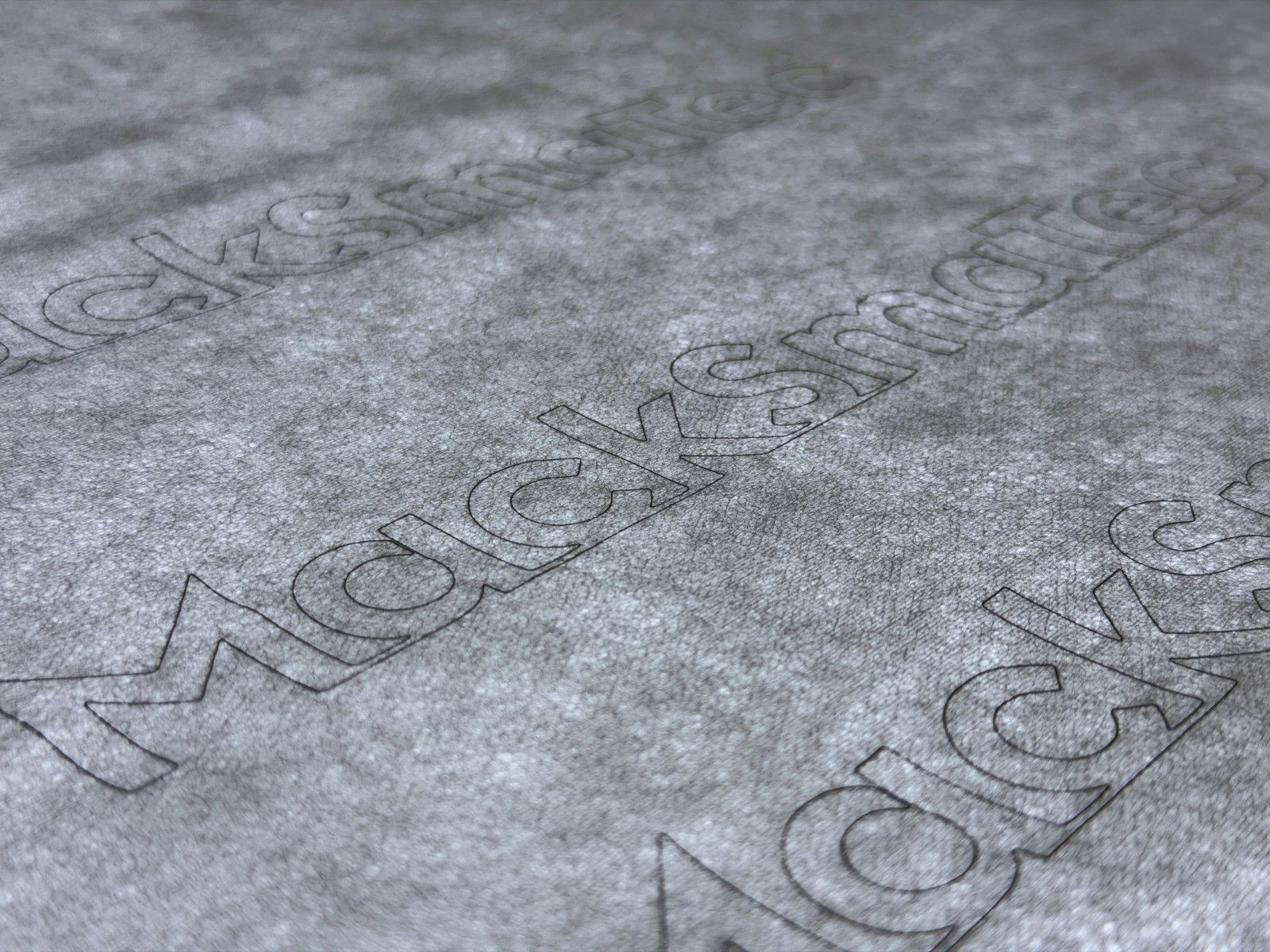
Flexible Electronics on Textiles: As part of the FlexTex-IR collaborative project, MackSmaTec is developing a new ultrasonic wire-embedding process for semi-finished textile products. The goal is to create a flexible infrared LED emitter for medical applications.
The Project
Printed circuit boards don’t have to be rigid. The FlexTex-IR project is developing a new technological process for manufacturing flexible, textile-based printed circuit boards. It is being tested using an (IR) LED emitter for medical technology.
At the heart of FlexTex-IR are self-contained IR LED units that can be interconnected to form a modular matrix. Sensors and AI-based control ensure that the infrared radiation is precisely tailored to the patient’s needs. An additional skin scanner supports diagnosis and monitoring of the patient’s progress.
Our Contribution
In the MackSmaTec subproject, we are adapting the ultrasonic wire-embedding process to the requirements of semi-finished textile products and hybrid yarns. The focus areas are:
Process development: We determine parameter spaces and boundary conditions for the stable placement of wires on textiles.
Material handling: Semi-finished textile products behave differently than traditional substrates. We are developing new concepts for handling and tensioning the material.
Contacting: We are investigating contacting methods that account for the temperature sensitivity of textile materials and adapting them to meet the requirements.
In doing so, we are expanding our expertise in wire placement to new, flexible materials and laying the foundation for textile electronics in medical technology and beyond.
-
- /
FlexTex-IR: Development and Evaluation of a New Technological Process for Fabricating Flexible, Textile-Based Printed Circuit Boards, Using an (IR) LED Emitter for Medical Applications as an Example
Project Number 2025 VFE 0077
FTI Thüringen TECHNOLOGIEfunding program of the Thüringer Aufbaubank
Projectduration : December1 , 2025, through May 31, 2028
The project, which is funded by the Free State of Thuringia, is co-financed by the European Union through the European Regional Development Fund (ERDF).