Mechanical Engineering Wiki / Abrasives
Abrasives
Abrasives are an optional additive that is used in waterjet cutting, for example in sheet metal processing. These are usually mineral substances that are hard and have an angular structure. Abrasives can be used to cut various materials quickly, cost-effectively and, above all, without generating heat. Waterjet cutting technology, also known as abrasive cutting, is becoming increasingly popular in the industry.
What abrasives are available?
Common abrasives include olive sand, quartz sand, corundum and garnet. These mineral materials are ideal for abrasive cutting due to their hardness and structure. Together with a water jet, they hit the material to be processed under high pressure and remove it particle by particle. While corundum is more suitable for softer materials, garnet and olive sand are recommended for hard materials. If you decide to use garnet sand as an abrasive, for example, you can choose between different types of sand, each with a different grain size. There are several gradations between the very fine flour sands and the large coarse sands. In direct comparison, garnet sand is slightly harder than quartz sand and is therefore also suitable for processing particularly hard materials. On the other hand, this form of abrasive is somewhat more expensive.
Abrasives not only have to be hard and have an angular structure, they also have to meet other requirements, particularly for health and safety reasons:
- Abrasives must not have any chemical activity
- Abrasives must not be toxic
- Abrasives must be ferrite-free
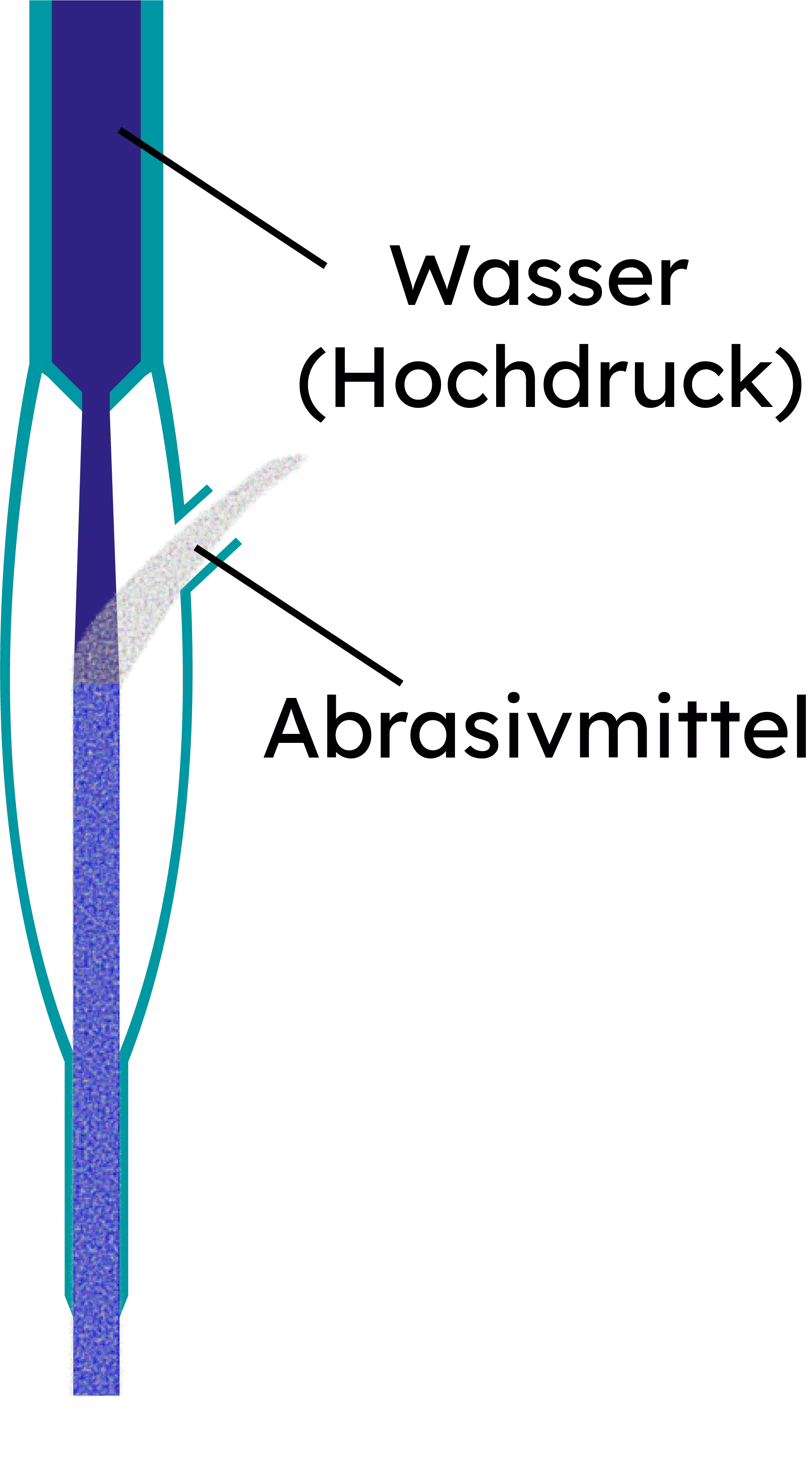
During waterjet cutting itself, the abrasive is sucked into the mixing chamber by the so-called Venturi effect (negative pressure). There, the water and abrasive mix together. The water jet mixed with the abrasive then hits the material to be processed. The amount of abrasive required per liter of water depends on the material selected and the size of the machine's nozzle. It should be noted that the jet diameter for waterjet cutting with abrasive is larger than for waterjet cutting without abrasive.
How can abrasives be recycled?
A large proportion of the abrasive used in waterjet cutting is disposed of as a waste product after use. This results in high costs for the machine operator. For this reason, more and more efforts are now being made to recycle abrasives. Recycled abrasive loses nothing of its effectiveness. In fact, initial results show that around 50% of the abrasive used can be recycled per operation. This can save enormous costs per year. Whether and to what extent recycled abrasive is suitable for a machine depends on various factors and must be compared with the respective manufacturer's specifications.