New requirements for personalization systems and special machine construction
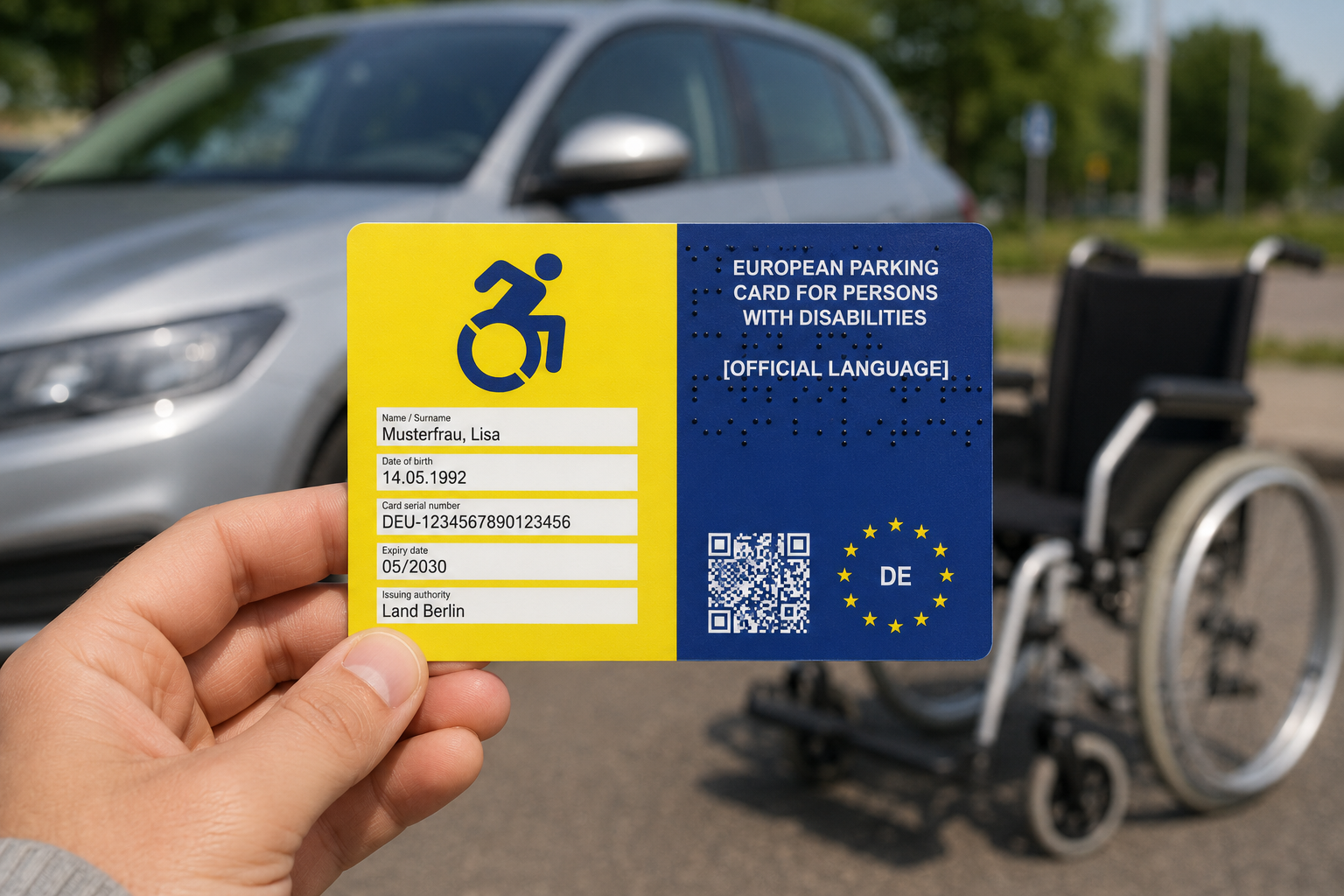
With Directive (EU) 2024/2841, the European Union took an important step towards greater accessibility across Europe at the end of 2024: By 5 June 2028 at the latest, all member states must introduce a uniform European Disability Card and a standardized European Disabled Parking Card.
What initially appears to be a purely political or socio-legal issue has technical and industrial implications - particularly for manufacturers of personalization and document production systems. The new EU-wide cards create new requirements in terms of security, format flexibility, data integration and production processes.
From individual national solutions to a European standard
Until now, there have been very different national disability cards and parking permits in Europe. The new EU directive is not intended to replace these systems, but to make them interoperable. In future, people with disabilities should be able to easily prove their status when traveling or staying in other EU member states.
The member states must now transpose the directive into national law.
In Germany in particular, the initial situation is complex. The current severely disabled person's pass is organized on a federal level, while parking permits are often issued by local road traffic authorities. The introduction of a Europe-wide standardized system therefore requires not only legal adjustments, but also new digital and organizational process chains.
As of today, the directive has not yet been fully transposed into national law in Germany.
Pilot countries are already showing the way
Some European countries have already gained practical experience with the future system. Italy in particular is regarded as an interesting pioneer. The "Carta Europea della Disabilità" there is already in use and combines
physical card
QR code-based verification
digital use via app
accessibility features such as Braille
This is an early indication of where modern disability ID cards are heading: away from a purely static document and towards an intelligent, verifiable proof of identity.
New requirements for personalization systems
For the mechanical and plant engineering industry, the introduction of the new EU cards is far more than just an ordinary card project.
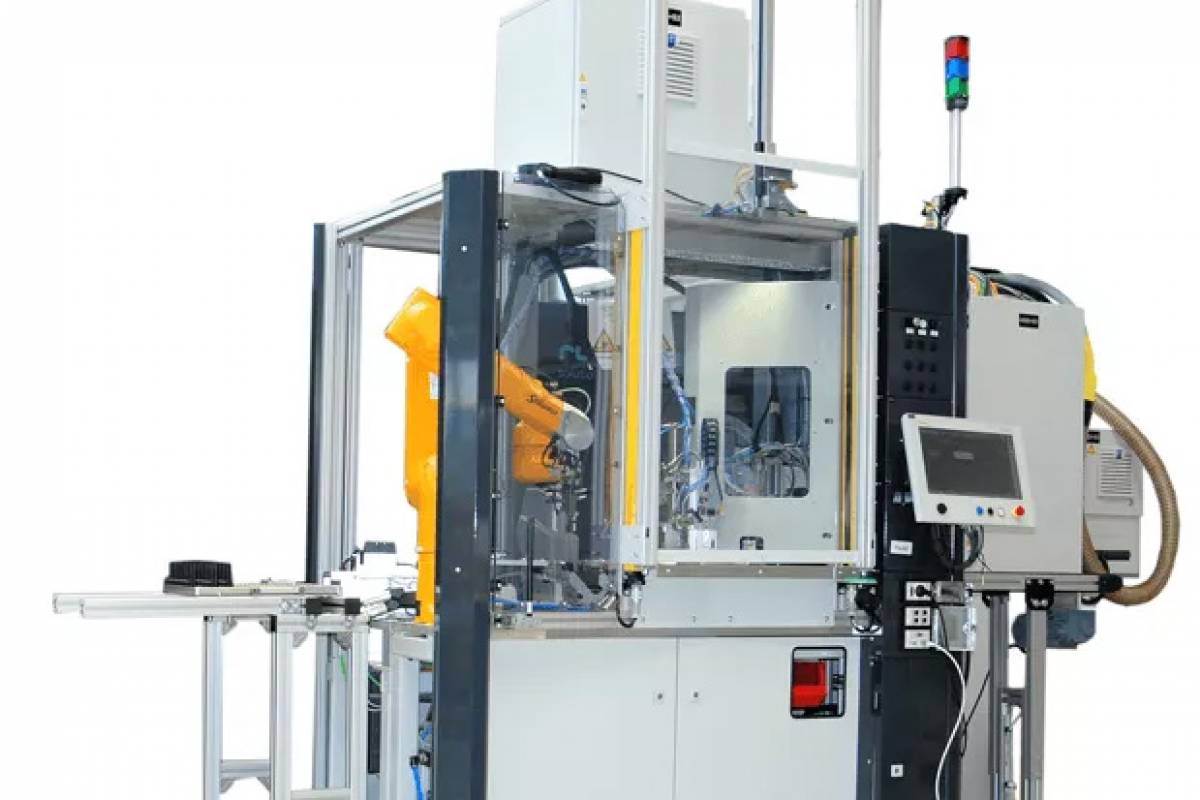
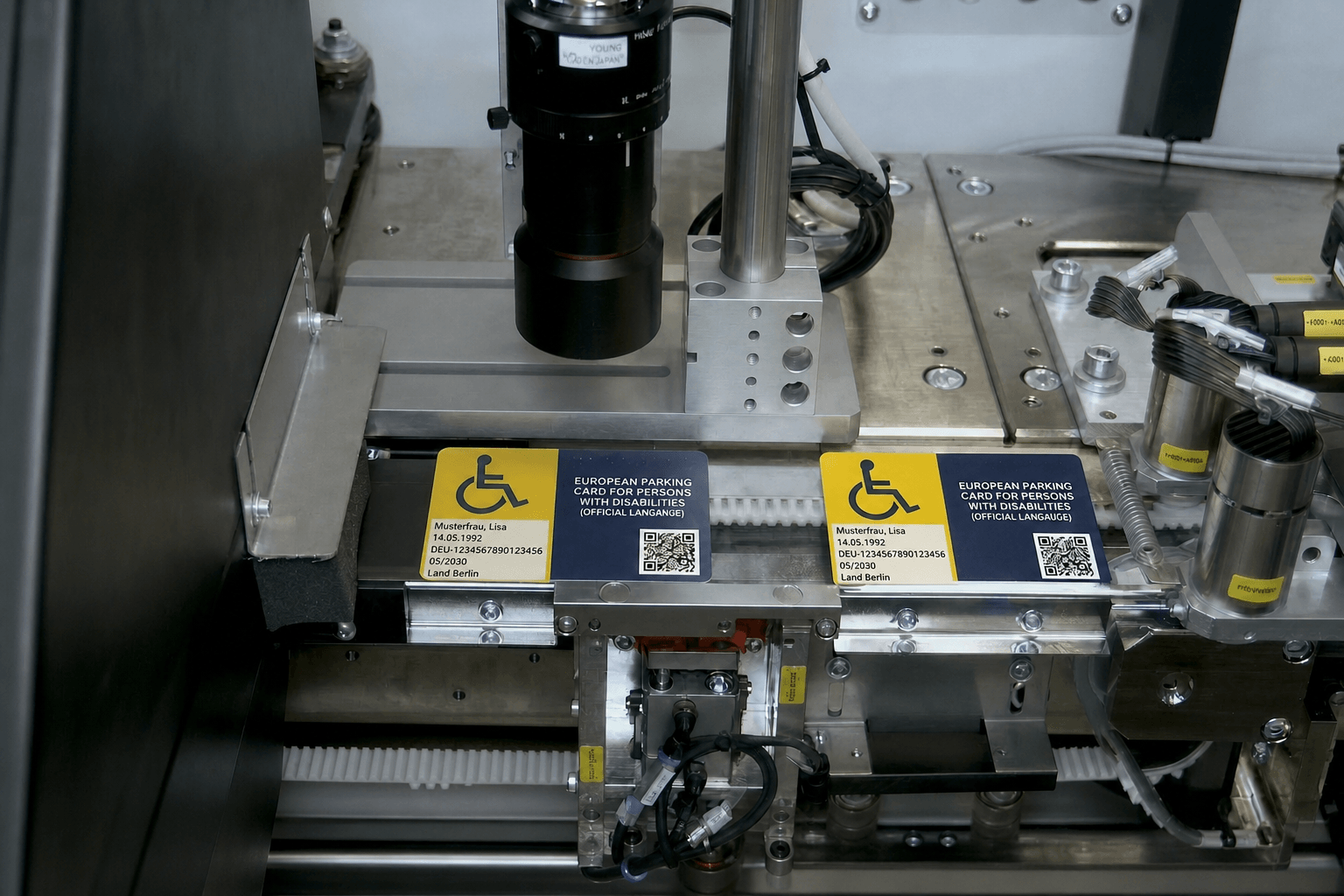
Until now, classic personalization systems were mainly designed for two standard formats: the ID1 card format and the ID3 passport format. With the European Disabled Parking Card, however, a significantly larger document format is now being created that places new demands on
Feeding systems
camera technology
handling processes
handling processes.
At the same time, the requirements for the security architecture of the documents are increasing. As a result, the focus of disabled parking permits is shifting from pure document printing to fully integrated security and identity processes.
Accessibility is becoming a technical production requirement
Another key aspect is accessibility. The new cards will include tactile elements, Braille features and standardized layouts.
In future, the machines used to personalize the disabled parking permit will have to ensure that tactile features can be reproducibly produced while maintaining a consistently high level of legibility. Automated quality checks and documented compliance processes are also becoming increasingly important.
The future is hybrid: physical and digital
The EU is clearly pursuing a hybrid approach with the new cards. The documents will not only exist physically, but will also increasingly integrate digital identities and wallet solutions.
This fundamentally changes the role of personalization systems. In future, the machine will no longer just produce a physical document, but will become part of a networked overall system consisting of card, digital identity, verification services and authority backends.
This also significantly increases the requirements for software integration, data management and cybersecurity.
For system manufacturers, this means one thing above all: flexibility is becoming crucial. Rigid special machines harbor high risks. What is needed are modular and scalable platform concepts that can be adapted to future regulatory requirements.
MackSmaTec as a technology partner for the next generation of secure document systems
This is precisely where MackSmaTec's role becomes particularly relevant.
With expertise in the areas of
Card and passport personalization
laser engraving
Inline quality control
RFID integration and
modular system architecture
MackSmaTec already has the key technological components required for the future implementation of European disability and parking cards.
The introduction of the new EU cards clearly shows that the future of secure documents no longer lies exclusively in the printing process, but in the intelligent combination of mechanical engineering, software, security and digital verification.
Conclusion
New challenges are arising for special machine construction in the areas of format flexibility, hybrid physical-digital systems and security integration.
The coming years will show which countries are particularly efficient in implementing these and which industrial solutions will become established throughout Europe.